Craft Fair Vendor Application: How to Get Accepted
A craft fair vendor application looks like a simple form: name, products, a few photos, a fee. But at popular shows, especially juried ones, it's a competition, and the people choosing vendors often have only your photos and a few lines of text to go on. This guide covers what a craft fair vendor application usually asks for, how to take the photos that do most of the work, a description template you can adapt, and how to budget for application fees so they don't quietly eat your profit.
What a craft fair vendor application usually asks
Forms differ, but most ask for some version of:
- Contact and business details: your name, business name, email, phone, website and social links.
- Product category: jewelry, ceramics, textiles, bath and body, food, art prints, and so on. Many shows limit how many vendors they accept per category.
- Product description: what you make and how.
- Photos: usually several of your work and often one of your booth.
- Price range: your lowest and highest prices, or a typical price.
- A handmade statement: whether you make everything yourself, use kits, or resell anything. Many shows don't accept resale.
- Booth needs: booth size, corner request, electricity, whether you bring a tent.
- Fees: an application or jury fee, and the booth fee (sometimes paid with the application, sometimes after acceptance).
- Documents: a certificate of insurance, a seller's permit or sales tax number, and food permits for food vendors. Some ask for these up front, others after acceptance.
Read the whole form before you start. The photo sizes, file names and deadlines are the details applicants most often miss.
Juried or not juried
A juried show has a person or panel review each application and choose vendors. They're usually looking for quality, originality and a good mix, so they don't end up with 15 candle booths. A non-juried show accepts vendors in order until booths run out, sometimes with a basic check that products fit the event.
Juried shows often charge a jury fee that isn't refunded if you're not accepted. That's not a reason to avoid them; it's a reason to apply with your best photos and to count the fee as a real cost. Our list of questions to ask before booking a craft fair explains what "juried" means at different shows and what to ask the organizer.
Photos do most of the work
At a juried show, the reviewers can't touch your work. They see your photos, often small, often next to dozens of other applicants. A typical set is four or five images:
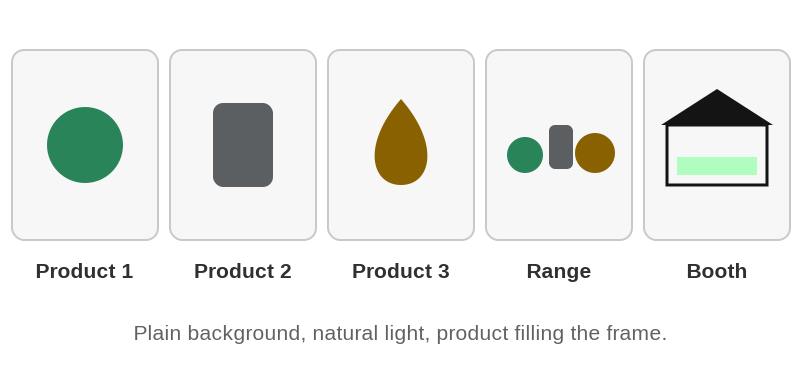
- Three single products, your best and most typical work, each alone on a plain background.
- One group shot showing the range: colors, sizes, price levels.
- One booth shot, set up as it will look at the show. If you haven't done a show yet, set it up in your driveway, garage or living room. It shows you're ready and that the booth looks finished.
Tips that make a visible difference:
- Natural light from a window or outdoors in shade. Avoid direct sun and flash.
- Plain, consistent background: white, light gray or a simple wood surface. The same background in every product photo makes the set look professional.
- Fill the frame with the product. Reviewers may see a thumbnail.
- No clutter, no watermarks, no text on the image unless the show asks for it.
- Follow the specs: size, format and file names (often "YourName_1.jpg"). A show that asks for five images and gets eight may only look at the first five.
- Show what you'll actually sell. If you're accepted on the strength of one-off showpieces and arrive with something else, you may not be invited back.
The description: short, specific, yours
Most applications give you a box of a few sentences. Use it to answer three questions: what you make, how you make it, and what makes it yours. A template:
I make [product] from [materials] using [process]. Each piece is [handmade / cut / poured / thrown] in my [studio / kitchen / workshop] in [town]. My work is known for [what's distinctive: a pattern, a technique, a theme], with prices from $[low] to $[high].
For example:
I make stoneware mugs, bowls and planters on the wheel in my home studio in Asheville. Every piece is glazed with my own mix of speckled blue and sand glazes, and fired in small batches. Prices range from $18 for small planters to $85 for serving bowls.
Avoid vague words like "unique" and "high quality" without anything behind them. Specific materials and process are more convincing, and they help the jury place you in the right category.
Price range: be honest and realistic
Give the range you'll actually have at the booth. A show that draws gift shoppers may want a good number of items under $30; a fine craft show may expect higher prices. If your range is wide, say what most of your sales are. If you're still working out prices, our guide on how to price items for a craft fair has a formula and a worked example.
Fees: budget for applications like any other cost
Application and jury fees are easy to forget because they're paid months before the market and some come to nothing. Treat them as a cost of the markets you do get into.
An example season (made-up numbers to show the math):
| Amount | |
|---|---|
| Applications sent | 6 |
| Jury fee per application | $25 |
| Total jury fees | $150 |
| Accepted | 3 |
| Application cost per accepted market | $50 |
That $50 belongs in each accepted market's costs, next to the booth fee, gas and food. On a market with $1,200 in sales and $150 in other event costs (booth, gas, food), it moves event expenses from 12.5% to 16.7% of sales, enough to change whether the market clears a 15% target. Our craft fair expenses checklist lists application and jury fees as their own line for this reason, and the free craft fair profit calculator shows the expense percentage for any market.
Also check:
- When the booth fee is due and whether it's refundable if you cancel.
- Weather policy for outdoor shows: refunds, rain dates or none.
- Deadlines. Popular shows can fill their categories well before the event. Put application open and close dates in your calendar for every show you want, and look for early-bird discounts.
Farmers market vendor applications are a bit different
A farmers market vendor application often asks more about where products come from: whether you grow or make everything yourself, your farm or kitchen location, and a full product list. Food vendors usually need health department or cottage food paperwork, and many markets ask for insurance. Some markets charge per day, some per season, and some a percentage of sales. Our guide on how to become a vendor at a farmers market goes through it step by step, and our craft fair insurance guide covers the certificate many markets ask for.
If you're not accepted
A "no" from a juried show often has nothing to do with your quality. The category may have been full, or the jury may have wanted a different mix that year. A few things help next time:
- Ask for feedback politely. Some organizers will tell you whether it was the photos, the category or something else.
- Ask about the waitlist. Vendors cancel, and waitlisted vendors fill the gaps.
- Improve the photos before anything else. It's the cheapest fix with the biggest effect.
- Apply again next year, ideally with a booth photo from a smaller market you did in between.
FAQ
What do I need to apply for a craft fair?
Usually your business details, a product description, several photos of your work and booth, your price range, and the application or jury fee. Some shows also ask for a certificate of insurance and a seller's permit or sales tax number.
How many photos should I submit with a craft fair application?
Follow the show's instructions exactly. When it's up to you, four or five works well: three of your best single products, one group shot showing your range, and one of your booth set up.
Are craft fair jury fees refundable?
Often not. Many juried shows keep the jury fee whether or not you're accepted, and refund or never charge the booth fee if you aren't. Read the fee and refund policy on the application before paying.
How far in advance should I apply to craft fairs?
As early as the show allows. Popular holiday shows can open applications months ahead and fill some categories quickly. Keep a calendar of open and close dates for the shows you want.