How to Become a Vendor at a Farmers Market (Step by Step)
If you're wondering how to become a vendor at a farmers market, the process is simpler than it looks from the other side of the table: decide what you'll sell, check your state's rules, find a market that fits, apply, and show up ready. The part that trips people up is the money. Markets charge in different ways (per day, per season or a share of sales), and the cheapest-looking option isn't always the cheapest. This guide walks through each step, compares fee types with real math, and ends with the numbers to check after your first Saturday.
A quick note before we start: rules for permits, food and sales tax are set by your state, county and city, and they vary a lot. This guide tells you what to check, not what the answer is where you live. Confirm the details with your state agencies or an accountant.
Step 1: Decide what you'll sell and whether markets want it
Farmers markets were built around growers, and many still are. Before anything else, look at the market's rules for:
- Producer-only policies. Many markets only accept vendors who grow or make what they sell. Reselling produce or products bought elsewhere is often not allowed.
- Crafts and non-food items. Some markets welcome handmade goods, some limit them to a small share of booths, and some don't allow them at all.
- Category limits. A market may already have three bakers and not want a fourth, while it's looking for flowers, honey or prepared food.
If you make crafts rather than food, look for markets that list artisans among their vendors, or "makers markets" and craft fairs that run on the same schedule. Our guide on how to sell at craft fairs covers that side.
Step 2: Check your state's rules
These are the questions to answer for your state and county before you apply. Many markets ask for proof of some of them on the application.
- Business registration. Whether you need a business license in your city or county.
- Sales tax. Whether your products are taxable, and whether you need a seller's permit. Some products are exempt in some states; Wisconsin, for example, lists sellers of nontaxable items such as vegetables or fruits among those who don't need a permit for temporary events. Idaho tells sellers at organized events to work with the event promoter to get a temporary seller's permit. Our craft fair sales tax guide explains the basics that also apply at farmers markets.
- Cottage food rules if you make baked goods, jams or other food at home. Where a state has these rules, they usually list which foods you can sell from a home kitchen, how to label them, and sometimes a yearly sales cap.
- Health department permits for prepared food, samples, meat, eggs or dairy.
- Scales. If you sell by weight, ask your state's weights and measures office whether your scale must be certified.
- Insurance. Many markets require vendor liability insurance. Our craft fair insurance guide explains what's usually asked and how to compare quotes.
Our farmers market vendor permit guide goes through each of these with official examples from several states.
Step 3: Find markets near you
- The USDA's National Farmers Market Directory lists markets with locations, schedules, products and accepted payment types. You can search by zip code.
- Your state's farmers market association or department of agriculture often keeps its own list, plus vendor resources.
- Local Facebook groups and community calendars, where newer and smaller markets announce vendor calls.
- Other vendors. Ask people who already sell. They know which markets are well run and which are quiet.
Step 4: Visit as a shopper first
Spend an hour at the market before you apply. Bring a notebook.
- Count people. Stand near the middle and count shoppers walking past in ten minutes, at opening and again around midday. It's a rough number, but comparing markets this way is more honest than "it seemed busy."
- Look at what sells. Which booths have lines? What are people carrying?
- Note prices in your category.
- Spot gaps. If there's no one selling what you make, that could be an opening, or a sign that this crowd doesn't buy it. Ask a vendor or the manager which.
- Talk to the manager. Ask how many vendors and shoppers they usually have, how booths are assigned, and what happens in bad weather. Our list of questions to ask before booking a craft fair works for markets too.
Step 5: Apply, and compare the fee types
Farmers market applications usually ask for your product list, where and how you produce it, photos, permits and insurance. Our guide to the craft fair vendor application covers photos and descriptions.
Then there's the fee. Markets usually charge one of three ways:
- Daily stall fee: a flat amount each market day you attend.
- Season fee: one payment for the whole season, often cheaper per day if you come every week.
- Percentage of sales: a share of what you sell, sometimes with a minimum.
Which is cheapest depends on how much you sell and how often you come. Here's a comparison with example numbers: $35 per day, $600 for a 26-week season, or 6% of sales.
| Weekly sales | Daily fee | Season fee (all 26 weeks) | 6% of sales |
|---|---|---|---|
| $300 | $35.00 | $23.08 | $18.00 |
| $500 | $35.00 | $23.08 | $30.00 |
| $583 | $35.00 | $23.08 | $35.00 |
| $800 | $35.00 | $23.08 | $48.00 |
| $1,200 | $35.00 | $23.08 | $72.00 |
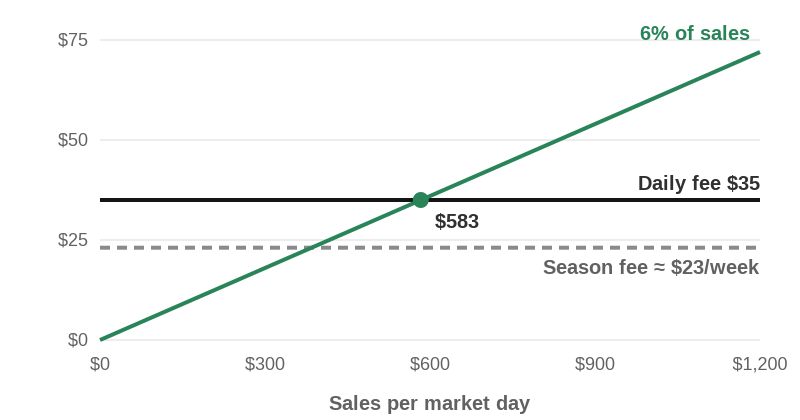
What the numbers say:
- The percentage fee is the cheapest while your sales are low, which makes it a gentle way to start. It passes the $35 daily fee once you sell more than about $583 a day.
- The season fee is only cheaper than the daily fee if you attend enough weeks: $600 ÷ $35 is about 17, so you'd need to come at least 18 of the 26 weeks. Miss a month for a family trip or bad weather and the advantage shrinks fast.
- A good first season plan: start on the daily or percentage fee, track your sales, and switch to the season fee next year if the numbers support it.
Step 6: Get your stall ready
For an outdoor market you'll usually need a 10 by 10 tent with weights on every leg, a table or two with covers, signs with prices, bags, and ways to take payment: cash, cards and any payment apps you accept. Our printable craft fair checklist covers the full packing list, and it works just as well for a farmers market stall.
Step 7: Check your first market's numbers
After your first market, work out what it really made, not just what you sold. A Saturday example:
| Amount | |
|---|---|
| Sales | $540 |
| Product costs (ingredients, packaging) | $189 |
| Card fees (about 2.6% + 10¢ per card sale) | $12 |
| Stall fee | $35 |
| Gas | $12 |
| Coffee | $6 |
| Profit | $286 |
| Hours (prep, drive, setup, selling, teardown) | 7, about $41 per hour |
Sales were 15.4 times the stall fee, so the fee is a small share of sales, and $41 an hour is a decent first day for most makers. Run your own numbers in the free craft fair profit calculator after each market. One market tells you little; eight Saturdays tell you whether the market is worth your whole season.
FAQ
Do I need a license to sell at a farmers market?
Often you need at least one: a business license, a seller's permit for taxable products, or food permits if you sell food. It depends on your state, county and products, so check with your state's revenue department, health department and the market manager.
Can I sell crafts at a farmers market?
At many markets, yes, but some limit crafts or only allow growers and food producers. Read the market's rules or ask the manager before applying.
How much does it cost to be a farmers market vendor?
It depends on the market's fee type (per day, per season or a percentage of sales), plus your permits, insurance, tent and supplies. Compare fee types against your expected weekly sales before choosing.
How do I find farmers markets that need vendors?
Search the USDA National Farmers Market Directory by zip code, check your state's farmers market association, and ask other vendors. Markets often announce vendor applications on their websites and social media before the season starts.