How to Find Vendor Events (and Vet Them Before You Apply)
Knowing how to find vendor events is half the job of selling in person. The other half is knowing which ones to skip. Good craft fairs, markets and pop-ups often fill their booths from returning vendors and word of mouth, so they don't always show up at the top of a search. This guide covers where to look (official directories, local calendars, venues, other vendors and a few search tricks), how to vet an event before you pay an application fee, and a simple way to track a whole season's events so deadlines don't slip past you.
Start with a radius and a calendar
Before you search, decide two things:
- How far you'll drive. Pick a limit for one-day events, for example an hour each way, since gas and time come out of the profit. Multi-day shows can justify farther.
- How many events you want, and when. For example: two events a month from April to December is 18 events.
Then work backward. If you want 18 events and you get into about half of what you apply to (an example rate; yours will depend on the events and your photos), you need to find and apply to about 36. That's why a steady list of leads matters more than one lucky find.
Where to find vendor events
Official directories
For farmers markets, the USDA runs the National Farmers Market Directory, part of its Local Food Directories. The listings can be filtered by ZIP code, product, payment method and SNAP participation. It's built mainly for shoppers, so treat it as a list of leads: confirm dates, vendor rules and contact details on each market's own site, since listings can be out of date.
Your state's department of agriculture or state farmers market association often keeps its own list and vendor resources. Search your state's name plus "farmers market directory."
Local government and community calendars
Many events are run or listed by local organizations. Check the events pages of:
- City or county parks and recreation departments
- Downtown associations and main street programs
- Chambers of commerce and visitor bureaus
- Public libraries and community centers
- Fairgrounds
These calendars often list events months ahead, and the organizers behind them tend to be easy to reach.
Venues that host markets
Some places host vendor events again and again: churches and schools (holiday bazaars and fundraisers), breweries and wineries (weekend pop-ups), shopping centers, community halls, and local shops that host makers' nights. If a venue has hosted a market before, ask when the next one is and how vendors apply.
Other vendors
The vendors already at a market are the best source of all. Walk an event as a shopper, buy something small, and ask: "Which events have been good for you this year?" Vendors who sell something different from you are usually happy to share. Local maker groups on social media are another place where vendor calls get posted.
Search tricks that surface vendor calls
Organizers post calls for vendors with fairly predictable wording. Try searches like these, with your city, county or state:
"call for vendors" craft fair [city]"now accepting vendors" holiday market [county]"vendor application" makers market [state] 2027"vendors wanted" pop up [city]
Run the same searches on social media sites, where many small events post first. And look at last year: most events repeat, so last year's flyer tells you roughly when this year's applications will open.
Vet an event before you apply
An application fee, a booth fee and a full day of your time are a real investment. A few minutes of checking can save a weekend. Before you apply, find out:
| Question | Why it matters |
|---|---|
| How many years has it run? | A first-year event is a gamble; a long-running one has a track record |
| How many vendors and shoppers, and how are shoppers counted? | "Thousands of visitors" means little without knowing how it's measured |
| How is it advertised? | Shoppers have to hear about it to show up |
| Who were last year's vendors? | Ask one or two how it went |
| Are categories limited? | Ten jewelry booths split the same shoppers |
| What's the refund and weather policy? | Especially for outdoor events |
| What are the hours, including setup and teardown? | Long days change your hourly profit |
Look for photos from last year's event taken around midday, not just at opening. Our list of questions to ask before booking a craft fair has more questions and an email you can copy.
Some warning signs: no clear organizer name or contact, no written vendor rules or refund policy, booth fees far above similar events nearby without a clear reason, and big attendance promises with nothing behind them.
A quick math check before you apply
Once an event passes the questions, check whether the booth fee makes sense for you. Use your own numbers from similar events if you have them. An example:
| Amount | |
|---|---|
| Your average sales per hour at similar one-day events | $120 |
| Selling hours at this event | 6 |
| Expected sales | $720 |
| Booth fee | $90 |
| Sales ÷ booth fee | 8x |
Many vendors aim for sales of at least 10 times the booth fee. At 8x this event is a "maybe": worth it if it's local, cheap to get to or likely to bring new customers, not if it needs a hotel night. Our guide is a craft fair worth it explains that rule and four others, and the free craft fair profit calculator checks any event's numbers in a minute.
No history yet? Use a cautious guess and start with low-fee community events, where a slow day costs little and teaches you your sales per hour.
Track your season in one table
Event leads arrive all year, and application deadlines are easy to miss. A simple tracking table fixes that. Here's an example with made-up events:
| Event | Date | Type | Booth fee | Applications | Status |
|---|---|---|---|---|---|
| Spring Makers Market | Apr 12 | Indoor craft fair | $85 | Closed Jan 31 | Accepted |
| Riverside Farmers Market | Saturdays | Farmers market | $35 a day | Rolling | Accepted |
| Brewery Pop-Up | May 18 | Pop-up | $40 | Open | Applied |
| Downtown Art Walk | Jun 7 | Festival | $150 | Closes Mar 1 | Waitlist |
| Holiday Bazaar | Dec 6 | Holiday market | $120 | Opens Jul 1 | To apply |
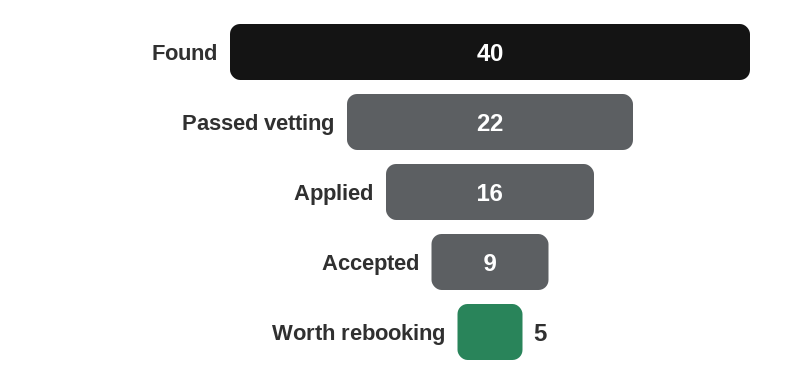
Add a reminder for every "opens" date, and count your season's funnel at the end: how many events you found, vetted, applied to, got into and would book again. If you find plenty but get into few, work on your application photos; our craft fair vendor application guide shows a five-photo set. If you get in but few are worth rebooking, tighten your vetting.
After each event, record what it really made so next year's list starts with facts. Our guide on how to calculate craft fair profit explains every cost, and a craft fair profit spreadsheet keeps one row per event.
FAQ
How do I find vendor events near me?
Check local government and community calendars (parks and recreation, downtown associations, chambers of commerce, libraries), venues that host markets, and local maker groups. Search for phrases like "call for vendors" or "now accepting vendors" with your city, and ask vendors at events you visit.
How do I find craft fairs to sell at?
Start with community calendars, churches and schools that hold holiday bazaars, and vendors at fairs you visit. Look at last year's events in your area, since most repeat and open applications at similar times each year.
How do I find farmers markets that accept vendors?
Search the USDA National Farmers Market Directory by ZIP code, check your state's department of agriculture or farmers market association, and then confirm vendor rules and application dates on each market's own website.
How can I tell if a vendor event is worth applying to?
Ask how long it has run, how many shoppers come and how that's counted, how it's advertised and who sold there last year. Then check the booth fee against your expected sales; many vendors want sales of at least 10 times the booth fee.