Craft Fair Rain Plan: Protect Your Booth, Stock and Sales
A craft fair rain plan is the thing you wish you had at 9:40 on a Saturday morning, when the forecast said "20% chance" and the sky disagrees. Outdoor markets mean weather: rain, wind, heat, and sometimes storms that close the event. You can't control any of it, but you can decide ahead of time what you'll bring, how you'll set up, when you'll pack up, and how you'll judge the day afterward. This guide walks through each part, with a simple gear list, a booth setup for rain and wind, a note on heat, what official guidance says about lightning, and how to look at a rainy market's numbers without overreacting.
Before the market: read the weather policy
Most outdoor events say what happens in bad weather somewhere in the application or vendor agreement. Look for:
- "Rain or shine." The event runs in any weather, and booth fees usually aren't refunded because it rained.
- Cancellation by the organizer. If the event is called off for severe weather, do you get a refund, a credit for next year, or nothing?
- Early closing. If the organizer closes early, can you leave, and how does teardown work?
- Your own cancellation. If you decide not to come because of the forecast, you'll usually lose the booth fee. Some events also say vendors who skip may not be invited back.
Our guide to the event vendor contract shows where these clauses usually sit and what a cancellation can cost in dollars. Read them before you pay, not the night before.
Then, the week of the market, check the forecast once a day and decide on one simple rule for yourself. For example: "If storms are forecast during market hours, I go only if the organizer confirms the event is on, and I bring the full rain kit."
The rain kit: what to bring
You don't need a lot, but you need it every time, because forecasts change. A basic kit:
| Item | What it's for |
|---|---|
| Sidewalls for the canopy | Block rain and wind on the exposed sides |
| Tarps or plastic sheeting | Cover the table and stock quickly |
| Lidded plastic bins | Keep stock dry under the table and in the car |
| A waterproof layer under the table cover | Cloth covers soak through; plastic underneath keeps product dry |
| Extra weights and straps | Wind comes with rain, and a wet canopy catches more of it |
| Clips and clamps | Keep covers and signs from flapping or blowing away |
| Towels | Dry hands, products and the card reader |
| Zip-top bags | Phone, card reader and cash |
| A rain jacket and dry socks | For you; it's a long day either way |
Our craft fair tent guide covers sidewalls, frames and the tent weight rules some markets publish. If the market lists a minimum weight per leg, bring that much even on a sunny forecast.
What it costs, with example prices: sidewalls $60, tarps $25 and lidded bins $40 come to $125. Spread over 15 outdoor markets a season, that's about $8 per market, which is less than one small sale's profit at most booths. Count it as part of your gear, like the tent itself. Our craft fair checklist has a rain section you can print.
Setting up for rain and wind
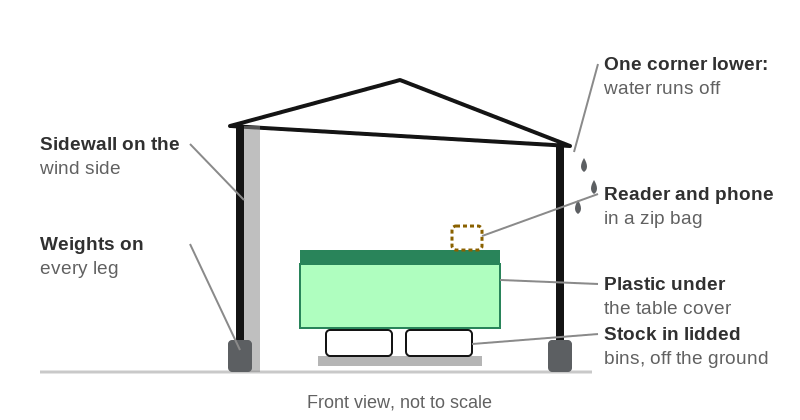
A few habits make the biggest difference:
- Weights first, always. Put the weights on every leg before anything goes under the canopy. Wind can pick up an unweighted tent in seconds, and a wet one is heavier and harder to hold.
- Don't let water pool on the roof. A flat canopy roof can collect water and sag. Lower one corner a little so water runs off, and push water off from underneath with a broom handle before it builds up. Point the runoff away from your table and your neighbor's booth.
- Close the sides the weather comes from. Put sidewalls on the side the wind and rain come from, and keep the front open so shoppers can still see in. If the wind is strong, closing walls can also turn the canopy into a sail, so watch it and follow the organizer if they ask vendors to take canopies down.
- Get stock off the ground. Puddles form fast under tables. Keep boxes and bins on a crate, a pallet or a low shelf, and keep the restock under the table in lidded bins.
- Show less, keep more covered. On a rainy day, put out a smaller display and refill from the bins. Paper goods, prints and fabrics can live in clear sleeves or bags.
- Wipe and dry as you go. A towel on a hook near the checkout spot keeps product and hands dry.
Heat and sun: the other bad weather
A hot, sunny day can hurt sales and products just as much as rain. Practical steps:
- Shade the products, not just you. Afternoon sun moves across the booth. A sidewall on the sunny side can keep products out of direct light.
- Know your heat-sensitive products. Candles, chocolate, soaps, cosmetics and some resins can soften, sweat or warp in a hot car or in direct sun. Bring only part of the stock out at a time and keep the rest in a cooler or a shaded bin.
- Plan for yourself. Water, a hat, sunscreen and a chair in the shade. A long day in the heat is tiring, and tired vendors sell less.
Lightning and severe weather: follow the organizer and the official guidance
This is the part of the plan where there's no trade-off. The National Weather Service says that no place outside is safe when thunderstorms are in the area, and that tents and partially enclosed vending areas don't protect you from lightning. Its lightning safety toolkit for outdoor venues covers how events should shelter people and when to resume, and its general guidance is to stay in a safe shelter until 30 minutes after the last thunder.
In practice, for a vendor:
- Know where the safe shelter is before the market opens: a building or your car, as the organizer directs.
- Follow the organizer's instructions right away when they pause or close the event.
- Secure the booth only if there's time to do it safely. Products can be replaced.
- Don't wait for the rain to start before moving, and don't come back just because it stopped.
Payments in the rain
Wet hands, wet cards and a wet phone are a bad mix. A few things help:
- Bag the electronics. A clear zip-top bag around the phone and card reader keeps them dry. Test at home that the screen and tapping still work through it.
- Keep the checkout spot covered, at the back of the booth where it stays dry.
- Have offline payments set up in case signal drops when the crowd shelters in one place. Offline payments come with limits and risks that depend on your provider; our comparison of the best card reader for craft fairs covers how the main options handle them.
- Cash in a bag, too. Wet bills stick together and are slow to count.
The money side: judging a rainy market fairly
A rainy edition almost always sells less, and it's tempting to drop the market right away. Before you do, compare it with the same market on a normal day. An example with made-up numbers, for the same Saturday market a year apart:
| Last year (dry) | This year (rain) | |
|---|---|---|
| Sales | $1,050 | $520 |
| Product costs (30%) | $315 | $156 |
| Card fees | $30 | $15 |
| Booth fee | $85 | $85 |
| Gas and food | $35 | $35 |
| Profit | $585 | $229 |
| Hours | 8 | 8 |
| Profit per hour | about $73 | about $29 |
| Sales ÷ booth fee | 12.4x | 6.1x |
On the rainy day, this market misses the 10x booth fee rule and the hourly number looks poor. But last year's edition was strong, and the drop has an obvious cause. Our guide is a craft fair worth it explains why many vendors only drop a market after two disappointing editions in a row, and our guide to comparing craft fair sales year over year shows how to note the weather next to each edition so you can tell a bad day from a bad market.
Write it down while it's fresh: "Rain from 10 to 2, foot traffic about half of normal, sold mostly small items." Next year, that one line tells you whether to rebook. The free craft fair profit calculator works out the profit, the booth fee multiple and the hourly number for both editions in a minute.
A one-page rain plan
Put this on a card in your rain bin:
- Read the event's weather and refund policy before paying.
- Check the forecast daily the week of the market; decide your go or no-go rule.
- Pack the rain kit every time: sidewalls, tarps, lidded bins, plastic under the cover, weights, clips, towels, zip bags.
- Weights on every leg first; one corner lower so water runs off.
- Stock off the ground, smaller display, refill from bins.
- Electronics and cash bagged; offline payments ready.
- Thunder: follow the organizer, go to safe shelter, wait 30 minutes after the last thunder.
- Afterward: note the weather next to the sales, and judge the market on more than one edition.
FAQ
Should I go to a craft fair if it's going to rain?
If the event is "rain or shine" and the forecast is rain without storms, many vendors go with a full rain kit, a smaller display and lower expectations. If storms are forecast, check with the organizer first and follow their decision. Your booth fee is usually not refunded either way, so read the policy before you book.
How do I keep my craft fair tent from collecting water?
Lower one corner of the canopy a little so water runs off, push water off the roof from underneath before it pools, and point the runoff away from your table and neighbors. Keep weights on every leg, since a wet canopy is heavier and catches more wind.
Is it safe to stay in my tent during a thunderstorm?
No. The National Weather Service says tents and partially enclosed vending areas don't protect you from lightning. Go to a safe building or your car as the organizer directs, and wait until 30 minutes after the last thunder.
Should I drop a market after a rainy day?
Usually not after one. Compare the rainy edition with the same market in normal weather, note the weather next to the numbers, and decide after a second edition. Many vendors only drop a market after two disappointing editions in a row.